Posted by · Leave a Comment
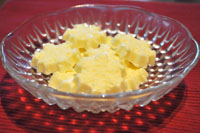 Butter.
It has assisted in and flavored many a recipe and, at times, come to my absolute rescue in the kitchen.
After researching “butter” (and, let me tell you, I was fascinated by all of it: the history, the “tools”, the commercial production) I was surprised to find there’s a USDA grading system — AA, A, and B — that is based on flavor, body, color and salt.
Oh, and how about this: the color of butter is directly related to the naturally-occurring compounds in the feed of the cows. Makes sense, right?
Did you know that in order to make one pound of butter, the cream from approximately 11 quarts of milk is needed?
It’s said the discovery of butter happened when a nomad hung a sack of milk around his horse’s neck and it shook and shook with the horse’s gait until butter formed. Now, we can just reach for it in the refrigerated section of the grocery store.
We’ve come a long way—yet butter remains, amazingly, about the same.
Here’s to you, Butter!
Comments Off on Blog Post About Our Butter Making Webisode
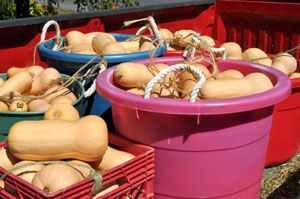
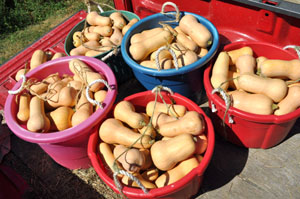 We are in the midst of harvesting the butternuts now. This load is the first picking and represents about 500 pounds. Altogether? We’ll get about 1500 pounds of butternut squash out of the less-than-half packet of seed that was planted.
 The children have been back at school for two weeks now and we’ve started to harvest butternut squash which can only mean one thing: summer’s officially over.
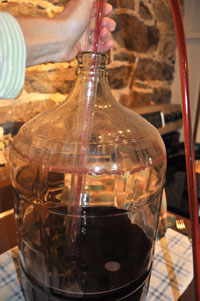 Make sure the intake is not resting in the must. Remember, the object is to capture only “clean” wine in this rack—leave behind as many particles as possible.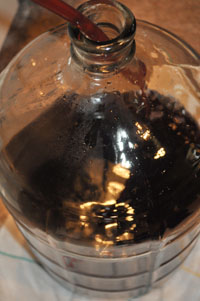
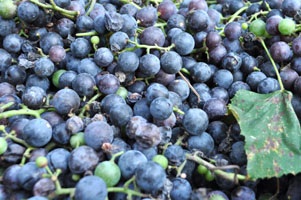
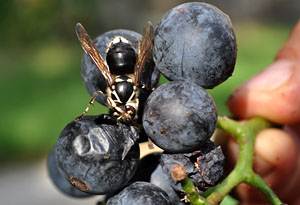 About two minutes into the task, I saw my first bald-faced hornet. And then another. And then another. In and around the grapes and vines with their heads tucked into the fruit and tails a’waggin’.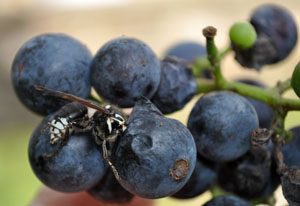
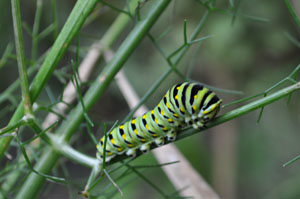 So there I was whacking away at the stalks, when I spotted this beautiful caterpillar balanced on a lower stem. I paused, momentarily, because the stripes were so unique. When I spotted the second one
 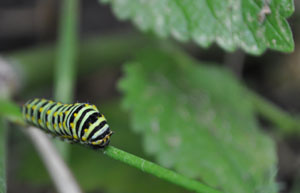 on the stalks, I put down my clippers. What was the connection between these caterpillars and this fennel plant?
 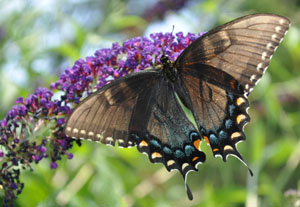 The caterpillars on the fennel plant are Eastern Black Swallowtails and feed on fennel, parsley, carrot, and dill. Wow. What a delicate balance?! I took this picture of a Black Swallowtail in my flower garden two months ago—not realizing how beneficial it would be to have a fennel plant a mere 20 feet away. I think I can learn to love fennel again—because I sure love these butterflies.
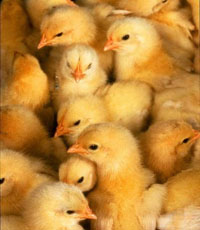 A trip to a hatchery! I’ve wondered about these magical places ever since our after-hours pick up of our first box of day-old chicks from the local post office (and I bet you thought chicks came from hens).
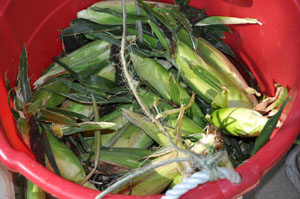 We bade a fond farewell to our sweet corn a week ago.
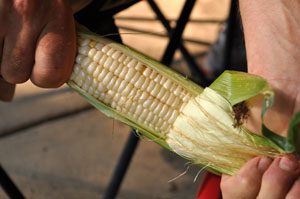 My husband always plants the old standby “Silver Queen.” It’s been a popular variety with farmers for decades and has a maturity of 92 days. This year, we also planted “Bodacious” which has a 75-day maturity and “Delectable” with an 84-day maturity. The different days to maturity as well as staggered plantings, allow for a sweet corn harvest over several summer weeks if you’re a savvy planter!
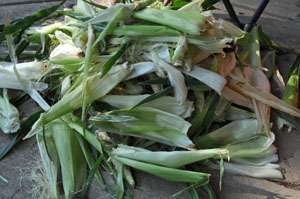 right off the cob!
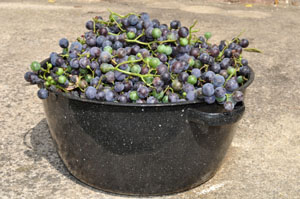 I’ll tell you: make one and a half quarts of grape juice and two batches of grape jelly, that’s what.
 started canning, I was drawn toward the jams because it was just a matter of squishing everything up and adding sugar and pectin. I was so proud! But, then, came the turned-up noses of two toddlers to the texture of the fruit and jelly—who knew? The following year, I relented and began making jelly. WHAT A SNAP?! Why was I intimidated? What was I thinking?
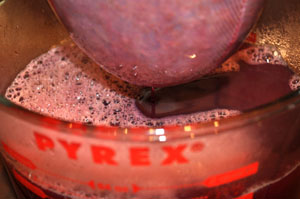
 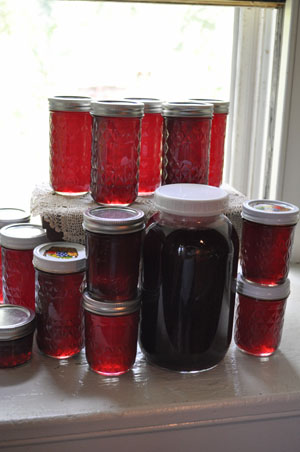 Jelly is now my preferred route of fruit preservation. I usually drip the mashed fruit overnight to collect the juice and then make the jelly, first-thing, the next morning. However, it seemed the grapes were pouring their juice through the jelly bag yesterday so I was able to make it the same day… make two batches… and collect more than a quart of juice.