Posted by · 2 Comments
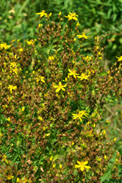
I’m not the biggest fan of fennel. However, it makes for a beautiful display in the herb garden. Its early stages appear feathery like a young dill plant. Later in the summer, the thickened stalks become tinged in a copper color and it shoots upwards in excess of five feet. The seed heads are numerous and bursting with fennel seeds right now—the perfect time to chop them off to stop them from spreading!!
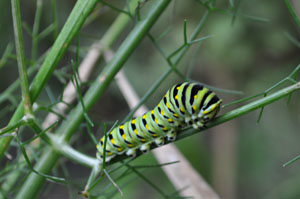 So there I was whacking away at the stalks, when I spotted this beautiful caterpillar balanced on a lower stem. I paused, momentarily, because the stripes were so unique. When I spotted the second one
 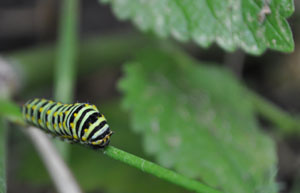 on the stalks, I put down my clippers. What was the connection between these caterpillars and this fennel plant?
After some online research, I learned adult butterflies feed on nectar plants while caterpillars feed on host plants. Those host plants are singled out by individual species for their ability to feed and nurture a caterpillar. Some butterflies are so picky, there is only one host plant upon which they lay their eggs and feed (such as the Monarch’s relationship with milkweed plants).
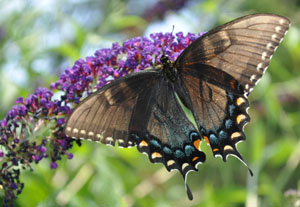 The caterpillars on the fennel plant are Eastern Black Swallowtails and feed on fennel, parsley, carrot, and dill. Wow. What a delicate balance?! I took this picture of a Black Swallowtail in my flower garden two months ago—not realizing how beneficial it would be to have a fennel plant a mere 20 feet away. I think I can learn to love fennel again—because I sure love these butterflies.
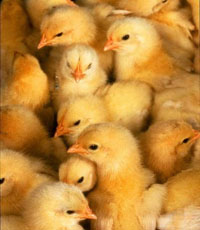 A trip to a hatchery! I’ve wondered about these magical places ever since our after-hours pick up of our first box of day-old chicks from the local post office (and I bet you thought chicks came from hens).
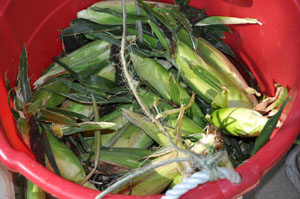 We bade a fond farewell to our sweet corn a week ago.
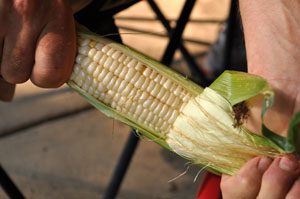 My husband always plants the old standby “Silver Queen.” It’s been a popular variety with farmers for decades and has a maturity of 92 days. This year, we also planted “Bodacious” which has a 75-day maturity and “Delectable” with an 84-day maturity. The different days to maturity as well as staggered plantings, allow for a sweet corn harvest over several summer weeks if you’re a savvy planter!
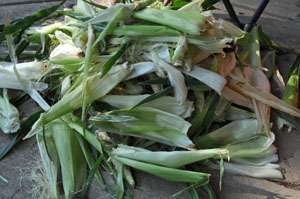 right off the cob!
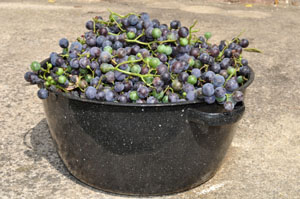 I’ll tell you: make one and a half quarts of grape juice and two batches of grape jelly, that’s what.
 started canning, I was drawn toward the jams because it was just a matter of squishing everything up and adding sugar and pectin. I was so proud! But, then, came the turned-up noses of two toddlers to the texture of the fruit and jelly—who knew? The following year, I relented and began making jelly. WHAT A SNAP?! Why was I intimidated? What was I thinking?
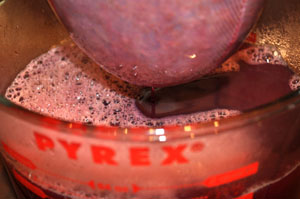
 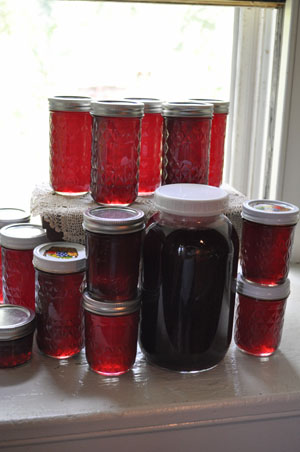 Jelly is now my preferred route of fruit preservation. I usually drip the mashed fruit overnight to collect the juice and then make the jelly, first-thing, the next morning. However, it seemed the grapes were pouring their juice through the jelly bag yesterday so I was able to make it the same day… make two batches… and collect more than a quart of juice.